You Don’t Have to Do This Alone
What Meg Draisma’s story teaches us about teams, trust, and doing hard things
When Meg Draisma walked into the inVocation Fellows program, she carried a vision. She’d been turning over an idea for a young adults conference at Ridge Point Church — a speaker, worship, breakout sessions, a whole event built around the conviction that young adults belong in the church and need a place to find each other. “I kind of had a vision for it for a while,” she said. “It was something that was kind of like stirring in the back of my mind, and then I was like, oh, I can actually make this a reality.”
Having the vision was one thing. Moving toward it was another.
By November, the project was sitting on her chest. Her mentor Cathy described it plainly: there was no forward energy. Meg was managing multiple ministry responsibilities, walking through a difficult personal season, and trying at the same time to put “legs and hands and feet” on something new. The ideas were there. The movement wasn’t.
What changed wasn’t the idea. What changed was the people around her.
Someone Has to See You First
Crystal didn’t know Meg well when she joined her Leadership Acceleration Team (LAT). But when Meg missed the first LAT gathering, Crystal reached out — not with an assignment, but with a question. How are you doing? Where are you with all of this? They met for coffee. It wasn’t a long meeting. But Crystal did something specific and practical: she named what she saw. She told Meg that her idea was actually good — not just “good for you” good, but genuinely practical and meaningful. And then she helped Meg get it out of her head and onto paper.
“I gain a lot of confidence when I plan,” Crystal said, “and when my ideas go out of my brain and onto paper, I have relief from that.” She wasn’t just offering a productivity tip. She was sharing something true about herself, in hopes that it might be true for Meg too.
It was. Meg left that meeting taking notes, and something began to shift.
This is what it means to have a team: not someone to do the work for you, but someone who can see what you’re carrying, name what’s real, and offer a tool you didn’t know you needed. Crystal didn’t have unlimited time. She didn’t have the full picture of what Meg was going through. But she showed up for one conversation at the right moment, and that was enough to move something.
Knowing People Are in Your Corner
Cathy put it simply: “When you know that there are people in your corner — even if they haven’t done lots of stuff — just knowing they’re there, knowing that they care, that really has been impactful.”
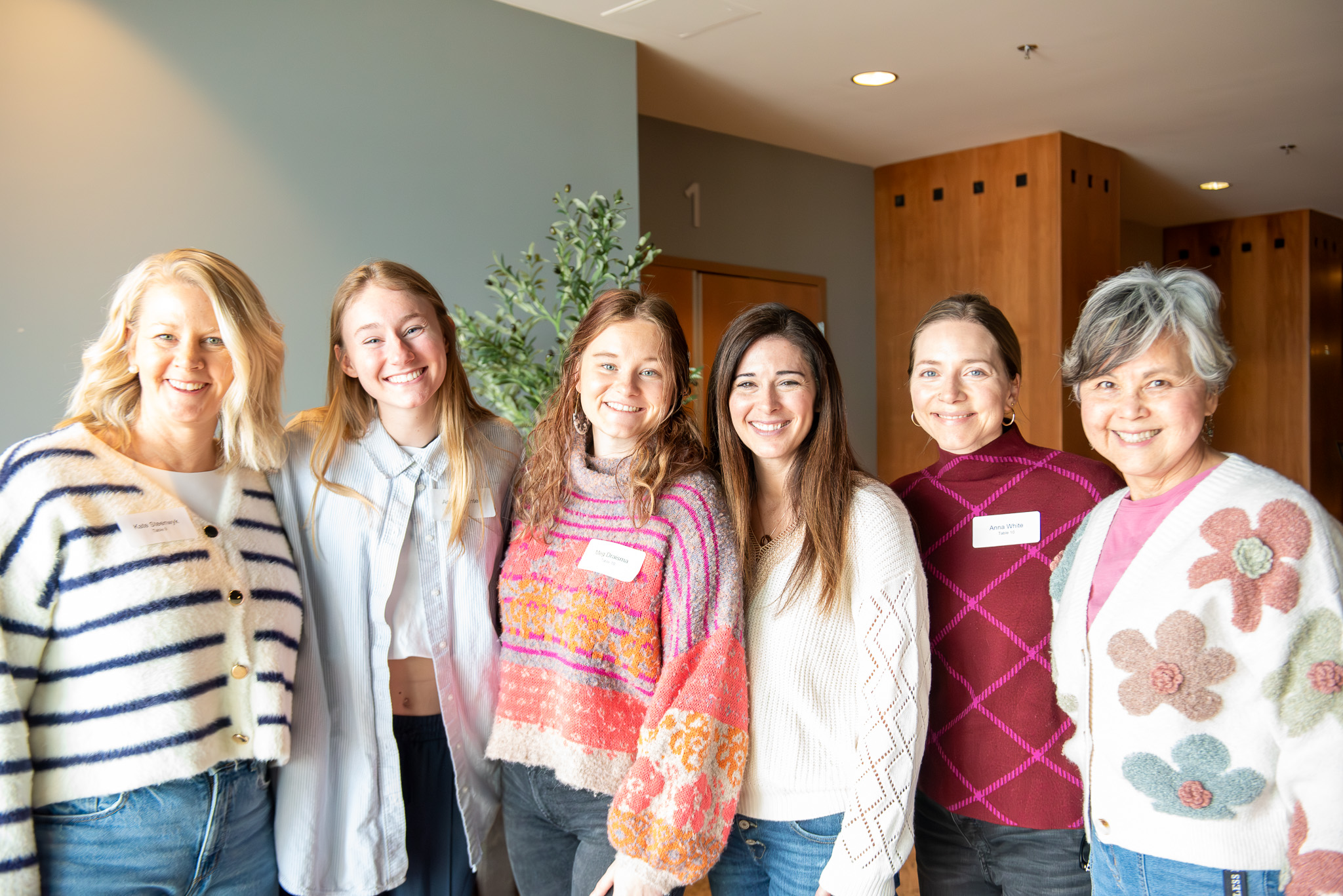
This is a truth that young adults often have to learn by experience. The weight of a hard season feels different when you’re carrying it alone versus when you know, concretely, that someone is praying for you. That someone sees you. That three women have agreed, on purpose, to show up for your flourishing.
“When you know that there are people in your corner — even if they haven’t done lots of stuff — just knowing they’re there, knowing that they care, that really has been impactful.”
Anna, the third LAT member, was honest about the limits of her involvement — life was full, her time with Meg was less than she’d anticipated. But even her presence at the table mattered. She watched Meg lead. She held the expectation that Meg was capable. She brought a different set of eyes, different questions, a different way of seeing things that Crystal and Cathy didn’t have.
No one person had everything Meg needed. Together, they had enough.
What Meg Learned
By the time Meg stood up to present her project, something had changed in her. She wasn’t just reporting on a plan — she was advocating for a population she loves. She talked about the gap at Ridge Point: all these groups and ministries, but nothing specifically for young adults who are still figuring out where they belong. She talked about a church tagline — “you belong here” — and named the chance to make that real for a generation that often slips through the cracks.
The woman who had been stuck, who had “no forward energy,” was now casting vision in a room full of her peers.
She also learned something about herself as a leader. In her own words: “I’m not that type of leader to be like, I’m gonna stand in front of you and make ideas happen… I found out that I’m a lot more of like a leader for small groups, where I’m gonna deposit my idea, and then I like leading conversation and seeing where that goes.”
That’s not a consolation prize. That’s a discovery. And it only becomes possible when you have enough support around you to actually try something, to stumble a little, and to come out the other side knowing yourself better than when you started.
What the Team Learned
The women around Meg didn’t walk away unchanged either.
Cathy, who has spent decades in church ministry, watched Meg wake up every morning and choose to stay in a calling that isn’t easy for women. That witness strengthened her own resolve. “To see potential in young people and be given that chance to run alongside — I will do it every day for as long as God gives me.” And she reflected on something deeper: mentoring is never a one-way street. “When you pray God into the moments, you’re going to be changed.” Meg mentored Cathy, too — in the particular, irreplaceable way that someone young and honest and still-becoming opens up a vision of the future in you.
Crystal discovered again what she already knew: that the desire to receive mentoring and the invitation to give it are quietly can be the same thing. She’d wanted a mentor herself for years. Pouring into Meg, she found that God was pouring into her.
Anna, despite less time than she hoped for, walked away with a renewed admiration for what it means to let young people actually lead. “The fact that she’s doing this at all — we’re not leading it, she’s leading it — is really fun to get to watch.”
The Thing About Belonging
Meg’s proposed conference title is “You Belong Here”. It’s not accidental that the project she designed for young adults — creating a sense of belonging for people still figuring out their place in the church — is the same thing the Fellows program gave to her.
She belonged to a team that saw her. She had people in her corner when the season was hard. She had someone who believed in her idea before she fully believed in it herself. And from that ground, she grew.
Nobody does the hard thing alone. The inVocation Fellows program is built on that conviction — that formation happens in relationship, that calling is discerned in community, and that young adults thrive not when they’re extracted from congregational life, but when they’re surrounded by people who know their name and refuse to let them disappear.
Meg didn’t disappear. She bloomed.